To identify large files that haven’t been accessed in a long time (potential candidates for archival or deletion), combine size and time parameters:
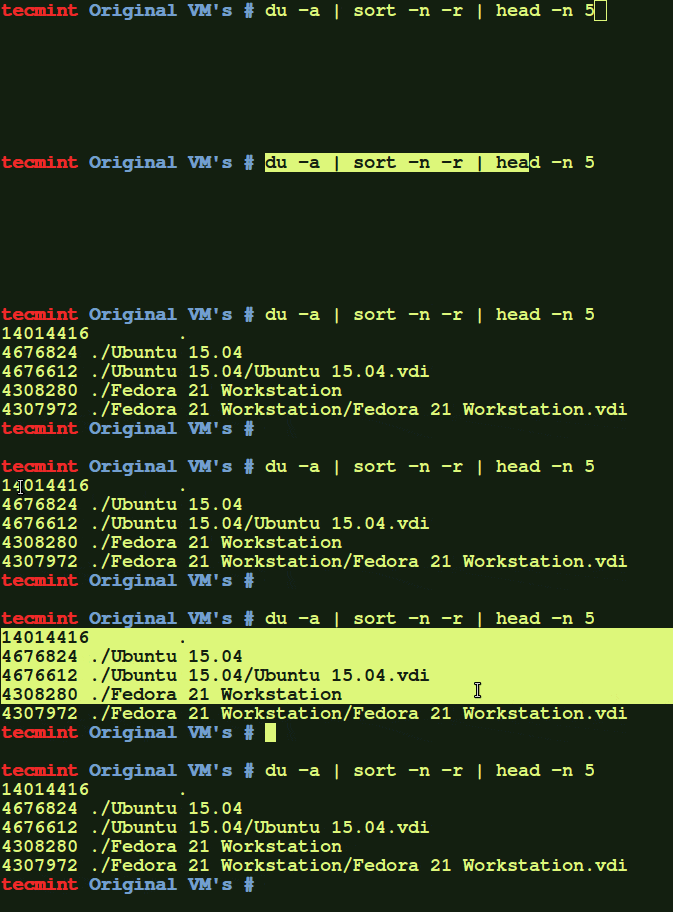
To display the largest folders/files, including the sub-directories, run:
Sometimes you don’t need to see all files ranked by size, but you just want to identify files that exceed a certain threshold, such as files larger than 100MB or 1GB.
Find Largest Directories in Linux Using du Command
find /home/tecmint -type f -empty
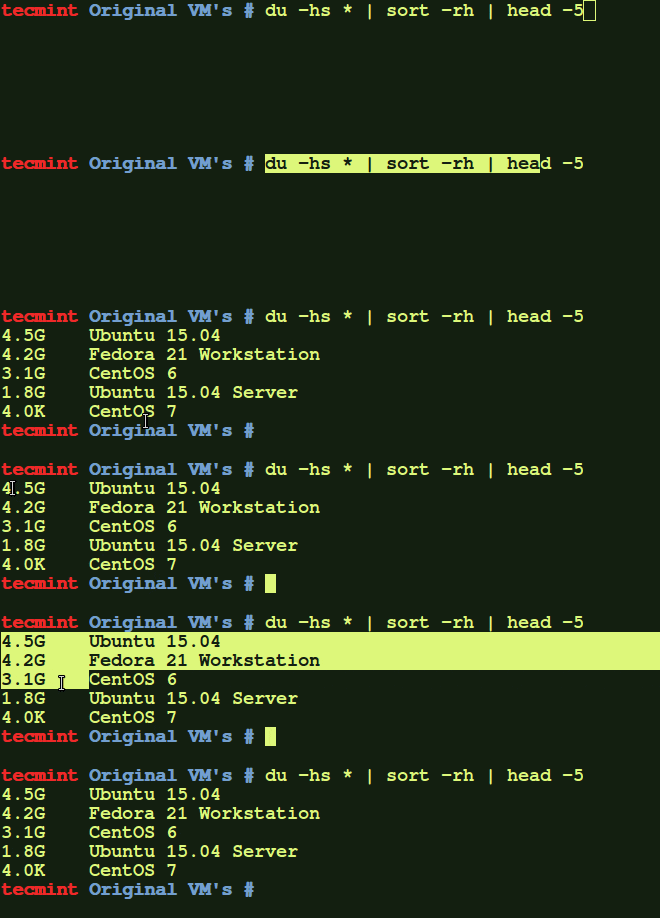
du -hs * | sort -rh | head -5
find -type f -exec du -Sh {} + | sort -rh | head -n 5

To find all empty files:
If you want to display the biggest file sizes only, then run the following command:
Find Top Directories and Subdirectories by Size
To find large files modified more than a year ago:
du -a | sort -n -r | head -n 5
Find and Remove Empty Files and Directories
That’s all for now. Finding the biggest files and folders is no big deal. Even a novice administrator can easily find them. If you find this tutorial useful, please share it on your social networks and support TecMint.
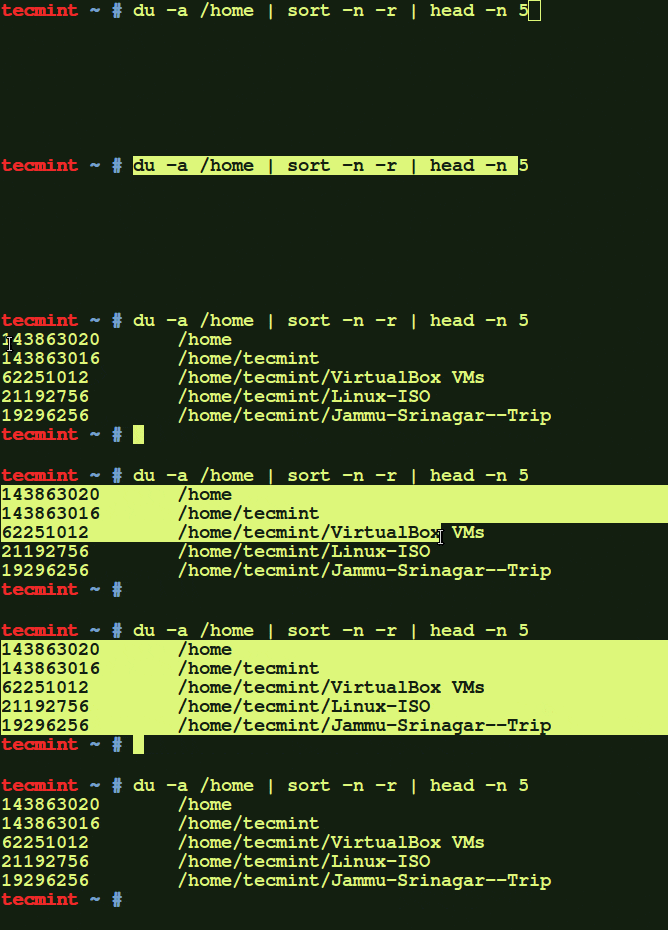
du -a /home | sort -n -r | head -n 5
Example: -size +500M finds files larger than 500 megabytes.
find /home -type f -size +50M -atime +180 -exec ls -lh {} ;
As a Linux administrator, you must periodically check which files and folders are consuming more disk space, because it is very necessary to find unnecessary junk and free it up from your hard disk.
find /var/log -type f -name “*.log” -exec du -ch {} + | grep total$
Find Total Space Used by Video Files
find /home -type f -size +1G -exec ls -lh {} ; | awk ‘{ print “: ” }’
find /home/tecmint -type f | sed ‘s/.*.//’ | sort | uniq -c | sort -rn | head -10
Find Total Space Used by Log Files
find /home -type f -size +100M -exec ls -lh {} ; | awk ‘{ print “: ” }’
find /home -type f -size +50M -ctime -7 -exec ls -lh {} ;
First, install ncdu:
find /home -type f -size +10M -size -100M -exec ls -lh {} ; | awk ‘{ print “: ” }’
Exclude Directories from Disk Usage Search
find /home/tecmint -type f -empty -delete
Analyze Disk Usage with ncdu Tool
ncdu /home
find /home/tecmint -type d -empty
To track down large files that were recently created (useful for identifying what’s filling up your disk):
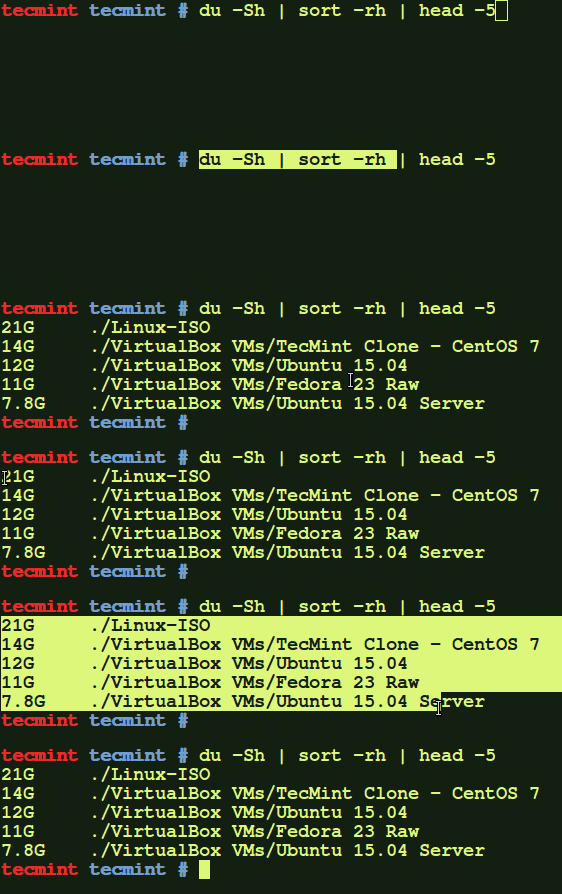
du -Sh | sort -rh | head -5
When using the find command with -size option, remember these units:
du -h –exclude=/proc –exclude=/sys –exclude=/dev / | sort -rh | head -n 10
Some of you would like to display the above result in a human-readable format. i.e., you might want to display the largest files in KB, MB, or GB.
find /var/log -type f -size +100M -mtime +365 -exec ls -lh {} ;
Find Disk Usage by File Type (Extension)
If you want to learn more about these commands, then head over to the following articles.
Find Recently Created Large Files in Linux
find /home/tecmint/Downloads/ -type f -exec du -Sh {} + | sort -rh | head -n 5
OR
find /home/tecmint/Downloads/ -type f -printf “%s %pn” | sort -rn | head -n 5

sudo yum install ncdu [On RHEL/CentOS/Fedora]
sudo apt install ncdu [On Debian/Ubuntu]
find /home -type f -not -path “*/node_modules/*” -not -path “*/.cache/*” -exec du -Sh {} + | sort -rh | head -n 10
In this article, you will learn how to find the largest files and directories consuming disk space in Linux using the du, find, and ncdu commands with examples.
Run the following command to find out the top 5 biggest directories under /home partition.